Cybersecurity
CVE-2026-27876: Grafana SQL Expressions RCE Exploit Chain Explained
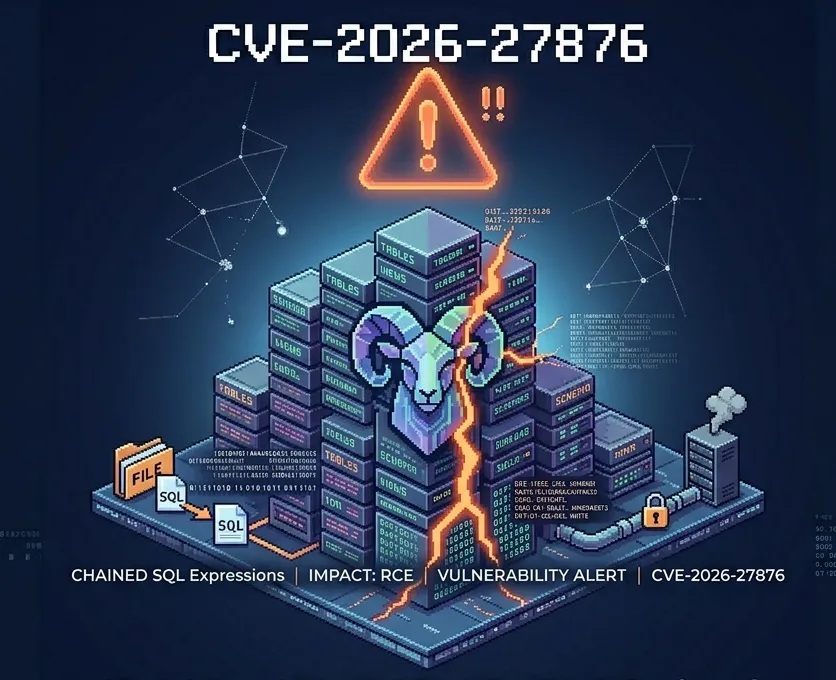
A critical vulnerability has been disclosed in Grafana that transforms a seemingly benign feature into a devastating attack surface. Tracked as CVE-2026-27876, this security flaw enables remote code execution (RCE) through a chained exploit that leverages the SQL Expressions engine alongside a Grafana Enterprise plugin. The vulnerability stands out because the underlying feature exists in Grafana OSS, meaning any instance with the sqlExpressions feature toggle enabled is at risk regardless of edition. Security teams and infrastructure engineers should treat this as a high-priority remediation item. Even organizations not currently running Enterprise plugins should update immediately, as Grafana Labs has explicitly recommended patching to close off future attack vectors following this same path. This article breaks down the full exploit chain, identifies who is affected, and provides the concrete mitigation steps every Grafana operator needs to implement now.
What Is CVE-2026-27876?
CVE-2026-27876 is a remote code execution vulnerability that exploits the interaction between two Grafana components: the SQL Expressions feature and a specific Grafana Enterprise plugin. Individually, neither component presents a direct path to code execution. However, when chained together, an authenticated attacker can leverage the SQL expression engine to write arbitrary files to the filesystem, overwriting critical components such as a Sqlyze driver or an AWS data source configuration file, ultimately achieving arbitrary command execution on the host operating system.
The SQL Expressions feature, governed by the sqlExpressions feature toggle in the Grafana configuration, allows users to apply SQL-like transformations to query results directly on the Grafana server. This server-side processing engine handles complex aggregations, joins, and filtering operations without requiring changes to underlying data source queries. While powerful for legitimate data manipulation, the feature introduces a server-side code evaluation surface that fundamentally expands what an authenticated user can make the server do.
The sqlExpressions Feature Toggle
Grafana employs a feature toggle system to control access to experimental and in-development capabilities. The sqlExpressions toggle activates the server-side SQL processing engine when enabled in grafana.ini or via environment variables. Once active, the engine parses SQL-like statements provided in dashboard panel configurations and executes them against in-memory result sets returned by data source queries.
The critical security implication is that this parser accepts user-provided input for server-side execution. While the parser includes input validation and sanitization layers, CVE-2026-27876 exploits an edge case in how certain SQL constructs are handled, allowing the evaluation engine to write arbitrary files to the host filesystem. An attacker who understands the parsing logic can craft expressions that pass initial validation but leverage this file-write capability to overwrite critical system components such as Sqlyze drivers or AWS data source configuration files.
The Arbitrary File Write and Plugin Chaining Vector
The core of CVE-2026-27876 lies in how the SQL Expressions engine handles certain SQL constructs that, when evaluated server-side, can be manipulated to write arbitrary files to the Grafana host filesystem. This file-write capability was not an intended feature but an unintended side effect of the expression evaluation logic combined with how Grafana Enterprise plugins load and process external configuration and driver files.
The chained attack works by leveraging this arbitrary file write to overwrite either a Sqlyze driver or to create a malicious AWS data source configuration file. When Grafana subsequently loads the overwritten driver or processes the injected configuration, the attacker-controlled code executes in the context of the Grafana server process. This is a classic write-what-where primitive escalated to RCE through component chaining, where the trust boundary between the SQL expression engine and the plugin/driver loading subsystem is insufficiently enforced.
How the Attack Chain Works
The exploit follows a precise sequence that an authenticated attacker must execute:
- Reconnaissance: The attacker identifies a Grafana instance with the
sqlExpressionsfeature toggle enabled, running a vulnerable version (v11.6.0 through v12.4.1). This can often be inferred from exposed API endpoints and the Grafana version fingerprint. - Crafted Expression Injection: The attacker submits a data source query containing a specially crafted SQL expression through the Grafana API. The payload is structured to pass the parser validation layer while exploiting the file-write side effect of the evaluation engine.
- Arbitrary File Write: The server-side SQL engine evaluates the expression. Due to insufficient sandboxing, the crafted payload writes attacker-controlled content to specific filesystem locations on the Grafana host.
- Driver or Configuration Overwrite: The written file overwrites a Sqlyze driver binary or creates a malicious AWS data source configuration file. These components are loaded by Grafana or its Enterprise plugins with elevated trust.
- Code Execution: When the overwritten driver is loaded or the malicious configuration is processed, the attacker achieves arbitrary command execution on the Grafana server with the permissions of the Grafana service account, potentially including SSH access to the host.
Who Is Affected?
The scope of CVE-2026-27876 depends on specific configuration conditions that require careful assessment:
- Directly vulnerable: Any Grafana instance (OSS or Enterprise) with the
sqlExpressionsfeature toggle explicitly enabled in the configuration, regardless of whether Enterprise plugins are currently installed. - Elevated risk: Grafana Enterprise installations where the specific plugin is installed, even if
sqlExpressionsis currently disabled. A future configuration change or accidental toggle activation could immediately expose the full attack chain. - Recommended to update: All Grafana instances, including those without the toggle enabled and without Enterprise plugins. Grafana Labs has stated that the underlying code path exists in OSS and could be exploited through alternative vectors in the future.
Organizations running Grafana in environments exposed to the internet, or accessible to broad internal user populations with data source query permissions, should prioritize this update. While authentication is required, many organizations grant Grafana Viewer access broadly across engineering teams. A single compromised account with Viewer permissions or higher is sufficient to exploit this vulnerability, as the exploit requires only the ability to execute data source queries.
Affected versions: v11.6.0 through v11.6.13, v12.0.0 through v12.1.9, v12.2.0 through v12.2.7, v12.3.0 through v12.3.5, and v12.4.0 through v12.4.1. Patched versions: v11.6.14, v12.1.10, v12.2.8, v12.3.6, and v12.4.2. Note that this security release also addresses CVE-2026-27880, a high-severity companion vulnerability fixed in the same update.
Real-World Architecture Scenario
Consider a mid-size SaaS company running Grafana Enterprise as its primary observability platform. The infrastructure team enabled sqlExpressions so data engineers could perform cross-data-source joins within Grafana, avoiding the need to build separate ETL pipelines for monitoring data. The instance sits behind an SSO provider and is accessible to approximately 200 engineers.
An attacker compromises a single engineer's credentials through a phishing campaign targeting the company's identity provider. With authenticated access to Grafana, the attacker submits crafted data source queries through the Grafana API, leveraging SQL Expressions to write malicious files to the server filesystem. Data source queries are routine activity generated by dashboards, so the requests trigger no alerts. The overwritten Sqlyze driver is loaded by the system, and the RCE payload executes on the Grafana server.
The Grafana server has network access to every configured data source: production PostgreSQL databases, Prometheus metrics clusters, Loki log aggregation, and Elasticsearch indices. An RCE on this host gives the attacker a foothold with broad network visibility into the company's entire infrastructure. From this position, credential harvesting from data source configurations and lateral movement to production systems become straightforward follow-up actions. The blast radius extends far beyond Grafana itself.
Detection and Mitigation Strategies
Immediate Mitigation Steps
If you cannot immediately upgrade your Grafana installation, apply these mitigations in priority order:
- Disable the sqlExpressions feature toggle: Set
sqlExpressions = falsein yourgrafana.iniunder the[feature_toggles]section. This eliminates the primary attack vector without affecting standard Grafana functionality. Dashboard panels using SQL expressions will stop working, but all other features continue operating normally. - Audit dashboard configurations: Review recent dashboard modifications for unusual SQL expressions. Look for expressions containing encoded payloads, abnormally long strings, nested function calls, or references to system functions unrelated to data transformation.
- Restrict dashboard editing permissions: Temporarily reduce the number of users with Editor or Admin roles. Use Grafana role-based access control to limit dashboard creation and modification while the vulnerability remains unpatched.
- Monitor server process activity: Configure alerts for unexpected child processes spawned by the Grafana service. Any shell execution (
bash,sh,cmd.exe,powershell) by the Grafana process should trigger an immediate investigation. - Update or disable Sqlyze: If you have Sqlyze installed, update it to at least version 1.5.0 or disable it entirely. The exploit chain can leverage Sqlyze driver overwriting as the primary RCE vector.
- Review AWS data source plugins: Disable any AWS data source plugins that are not actively needed. The exploit can also achieve RCE by writing a malicious AWS data source configuration file.
Long-Term Security Hardening
This vulnerability highlights architectural weaknesses that organizations should address beyond the immediate CVE:
- Least privilege for Grafana service accounts: Run the Grafana process under a dedicated account with minimal filesystem and network permissions. Use Linux namespaces, SELinux/AppArmor policies, or Windows service restrictions to contain the impact of any code execution vulnerability.
- Network segmentation: Place Grafana in a restricted network segment with firewall rules allowing connections only to known data source endpoints. Grafana should not have unrestricted outbound access to the broader infrastructure.
- Feature toggle governance: Establish a review process for enabling feature toggles, especially those that introduce server-side code evaluation. Treat toggles like
sqlExpressionsas security-relevant configuration changes that require security team approval. - Plugin inventory management: Maintain an inventory of installed Enterprise plugins, review their permission requirements periodically, and remove plugins that are no longer actively needed.
Performance and Scalability Considerations When Patching
Upgrading Grafana in production requires planning, particularly in large-scale deployments. Organizations running Grafana behind a load balancer in a high-availability configuration can perform rolling upgrades to maintain availability. However, the patched version includes changes to the SQL expression parser that may affect performance characteristics.
The security fix introduces additional validation steps in the expression parsing pipeline. For legitimate queries, the overhead is minimal. However, dashboards with extremely complex SQL expressions—deep nesting, multiple joins, or large result set transformations—should be tested in a staging environment before the production upgrade. Measure query execution time before and after the patch to identify any regressions that require expression optimization.
For Kubernetes-based deployments, the upgrade path is straightforward: update the container image tag and let Kubernetes handle the rolling update. A common mistake in this scenario is storing Grafana configuration inside the container filesystem rather than externalizing it through ConfigMaps or a configuration management tool. If the configuration is not externalized, an upgrade could reset grafana.ini to defaults, potentially re-enabling feature toggles that were previously disabled. Always verify your feature toggle state after any upgrade.
Common Mistakes Developers Make with Grafana Security
CVE-2026-27876 exposes patterns of insecure Grafana management that remain widespread across the industry:
- Enabling feature toggles without security assessment: Teams routinely enable experimental features in production based solely on functional requirements. Every feature toggle that adds server-side processing should be evaluated as a potential attack surface expansion before activation.
- Treating authentication as sufficient authorization: Many organizations grant all authenticated users at least Viewer permissions in Grafana, reasoning that anyone should be able to see monitoring dashboards. This CVE proves why the principle of least privilege matters: even Viewer-level access provides the ability to execute data source queries, which is the attack vector. Organizations should restrict data source query permissions and disable SQL Expressions unless operationally required.
- Excluding monitoring tools from patch management: Observability infrastructure is frequently omitted from regular patch cycles because teams fear breaking dashboards or alerting configurations. This creates persistent vulnerability windows that compound over time.
- Running Grafana with excessive system privileges: The blast radius of any RCE vulnerability is proportional to the process privileges. Running Grafana as root or with broad network access amplifies the impact of every code execution flaw.
- Ignoring Enterprise plugin security posture: Teams that rigorously audit application dependencies often overlook the security implications of their Grafana plugin installations. Enterprise plugins execute with elevated trust and deserve the same scrutiny as any third-party code in the stack.
CVE-2026-27876 Compared to Previous Grafana Vulnerabilities
Grafana has experienced several notable security vulnerabilities throughout its history. Comparing CVE-2026-27876 to previous issues reveals the evolution of attack surfaces in the platform and the recurring risk posed by the SQL Expressions feature.
| Aspect | CVE-2026-27876 (SQL Expr. RCE) | CVE-2021-43798 (Path Traversal) | CVE-2024-9264 (SQL Expr. SQLi) |
|---|---|---|---|
| Attack Type | Chained RCE via expression injection | Directory traversal / arbitrary file read | SQL injection via SQL Expressions |
| Authentication Required | Yes (Viewer+) | No | Yes (Viewer+) |
| Impact | Remote Code Execution | Information Disclosure | RCE (CVSS 9.9 Critical) |
| Affected Component | SQL Expressions + Enterprise Plugin | Plugin proxy routes | SQL Expressions (DuckDB) |
| Feature Toggle Dependent | Yes (sqlExpressions) | No | Yes (sqlExpressions) |
| Scope | OSS + Enterprise | OSS + Enterprise (v8.x) | OSS + Enterprise |
The trend is unmistakable: the sqlExpressions feature has emerged as a recurring attack surface in Grafana. CVE-2024-9264 previously demonstrated SQL injection through this feature when DuckDB served as the backend engine. CVE-2026-27876 escalates the threat by introducing a chaining technique that achieves full RCE even when direct SQL injection mitigations are in place. This progression makes a strong case for treating the sqlExpressions toggle as a high-risk configuration option that should only be enabled when there is a clear operational need and appropriate compensating controls.
Frequently Asked Questions
Is CVE-2026-27876 exploitable without authentication?
No. The attacker must have authenticated access to the Grafana instance with at least Viewer-level permissions, which grants the ability to execute data source queries. The exploit works through the Grafana query API and does not require dashboard creation or modification. In organizations where Grafana access is broadly distributed among engineering teams, the pool of accounts that could be leveraged is often large, and a single compromised credential is sufficient.
Does disabling the sqlExpressions feature toggle fully mitigate the risk?
Yes. Disabling the sqlExpressions toggle deactivates the SQL expression evaluation engine, removing the primary attack vector. Without server-side SQL processing, the malicious payload cannot be executed. However, upgrading to the patched version remains strongly recommended because it addresses the underlying code defect and protects against potential future exploitation paths.
Can this vulnerability be exploited via the Grafana API without the dashboard UI?
Yes. The attack does not require interaction with the Grafana web interface. The exploit leverages the data source query API to execute the crafted SQL expression, making it fully scriptable and automatable. No dashboard creation or modification is needed. This significantly increases the speed at which an attacker could move from initial access to code execution.
What should I do if I suspect exploitation has already occurred?
Immediately isolate the Grafana server from the network. Review process execution logs for unexpected child processes spawned by the Grafana service. Inspect the filesystem for new or modified files, particularly in temporary directories. Audit all dashboard configurations for unusual SQL expressions. Rotate every credential the Grafana server had access to, including data source passwords, API keys, and service account tokens stored in the Grafana database.
Are Grafana Cloud instances affected by CVE-2026-27876?
Grafana Labs manages patching for Grafana Cloud instances. Contact Grafana Labs support to confirm your instance has been updated. Only self-managed Grafana installations require manual intervention by the operations team responsible for the deployment.
Conclusion
CVE-2026-27876 represents a significant escalation in the threat landscape for Grafana deployments worldwide. The chained nature of the exploit, combining SQL Expressions with an Enterprise plugin deserialization flaw, demonstrates the increasing sophistication of attacks targeting observability infrastructure at the heart of modern engineering organizations. The immediate actions are clear: disable the sqlExpressions feature toggle, update Sqlyze to v1.5.0 or disable it, review AWS data source plugins, and upgrade to the patched Grafana version (v11.6.14, v12.1.10, v12.2.8, v12.3.6, or v12.4.2) at the earliest opportunity. Beyond the immediate fix, this vulnerability should prompt a broader review of your monitoring infrastructure security posture. Evaluate whether the sqlExpressions feature provides enough value to justify the attack surface it introduces, tighten RBAC policies to limit dashboard editing privileges, and ensure your Grafana deployment follows defense-in-depth principles so that no single vulnerability can cascade into a full infrastructure compromise.
References
- Grafana Labs. "Grafana security release: Critical and high severity security fixes for CVE-2026-27876 and CVE-2026-27880." Grafana Labs Blog, March 27, 2026. grafana.com/blog/grafana-security-release-critical-and-high-severity-security-fixes-for-cve-2026-27876-and-cve-2026-27880
- NIST National Vulnerability Database. "CVE-2026-27876 Detail." NVD, March 27, 2026. nvd.nist.gov/vuln/detail/CVE-2026-27876
- MITRE CVE Program. "CVE-2026-27876 Record." CVE.org, February 24, 2026. cve.org/CVERecord?id=CVE-2026-27876
- Tenable. "CVE-2026-27876 - Grafana SQL Expressions RCE." Tenable CVE Database, March 27, 2026. tenable.com/cve/CVE-2026-27876
- Canadian Centre for Cyber Security. "Grafana security advisory (AV26-285)." Government of Canada, March 26, 2026. cyber.gc.ca/en/alerts-advisories/grafana-security-advisory-av26-285
- Grafana Labs. "Remote Code Execution in SQL Expressions in Grafana - CVE-2024-9264." Grafana Security Advisories. grafana.com/security/security-advisories/cve-2024-9264
Tags
Share this post
Subscribe
Get the latest posts delivered right to your inbox.


Leave a comment