Cloud & DevOps
The Senior Engineer's Guide to Edge Computing Architectures
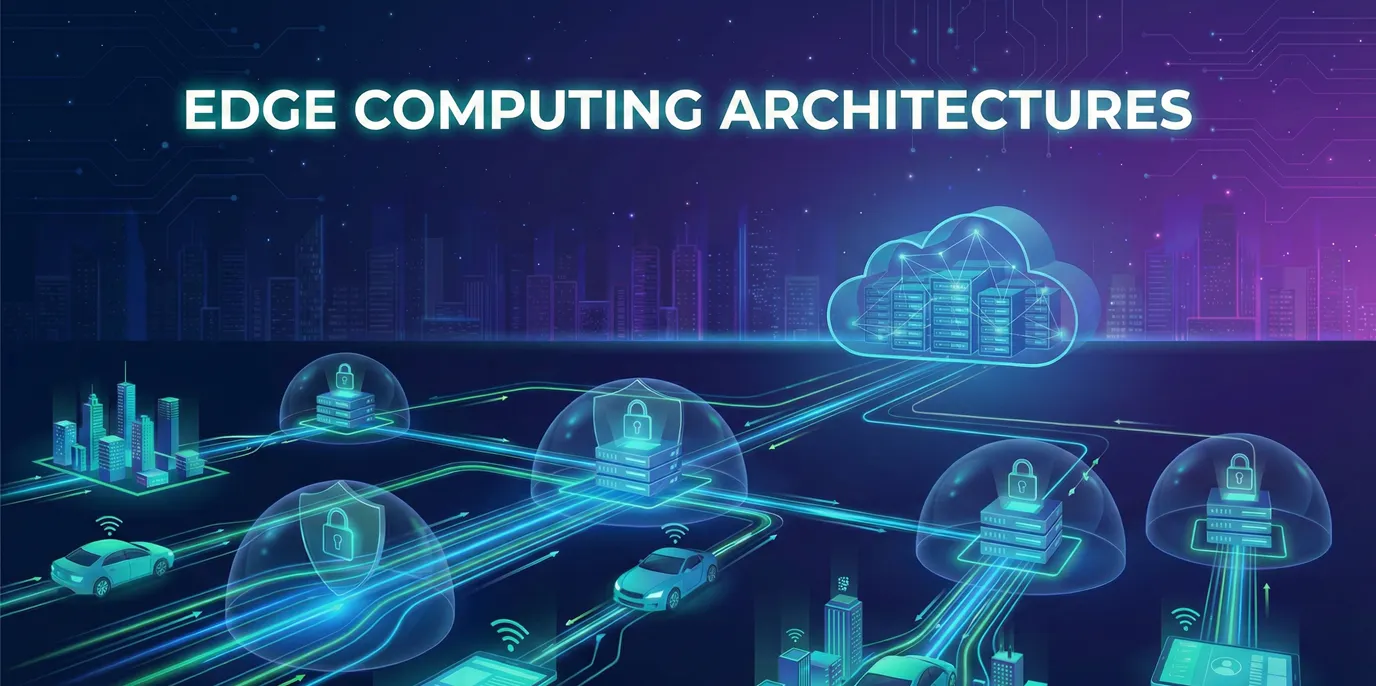
For the past decade, cloud computing architectures have centralized around massive, hyper-scale data centers. Applications have funneled exabytes of data from endpoints across the globe back to facilities in `us-east-1` or `eu-central-1` to perform computation. However, this centralization is hitting unbreakable physical limits. You cannot out-engineer the speed of light. Connecting a smart device in Tokyo to a server in Virginia introduces round-trip latencies that break real-time systems. Enter Edge Computing—the paradigm shift that pushes computation, data storage, and routing logic out of the centralized cloud and directly into the periphery of the network, microseconds away from the user.
In this technical deep dive, we will decompose the architecture of edge computing platforms. We will analyze the evolution from simple static CDNs to highly programmable Serverless Edge Functions (like Cloudflare Workers and AWS Lambda@Edge). We explore the profound implications this has on stateful data, the security benefits of pushing WAFs to the perimeter, and the orchestration challenges inherent in managing distributed computing environments across thousands of physical nodes.
The Evolution from CDN to Compute Edge
Historically, Content Delivery Networks (CDNs) were purely static storage mechanisms. They cached images, CSS, and HTML files. If a user requested dynamic data, the CDN transparently acted as a reverse proxy, forwarding the request to the centralized "origin" server. This model completely fails for personalized caching or dynamic logic injection.
Programmable Edge Computing alters this by deploying V8 Isolates (the engine behind Node.js and Chrome) or WebAssembly runtimes directly onto the CDN nodes. Because Isolates lack the heavy footprint of entire Virtual Machines or even Docker containers, "cold boot" times drop from 500ms down to sub-10 milliseconds.
Technical Insight: Edge architectures force developers to write stateless, ultra-lightweight functions. A traditional Node.js lambda might allocate 256MB of RAM. An Edge Isolate restricts memory to mere megabytes, enforcing strict algorithmic efficiency and avoiding heavy dependency trees (like massive NPM packages).
Practical Scenario: A global media publisher needs to perform A/B testing and personalize content based on the user's geolocation and cookies. Instead of hitting the centralized backend cluster to calculate the variant, a Serverless Edge Function intercepts the request in the user's local city, parses the cookie, fetches the static variant from the local cache, and responds in 15ms. The central server is completely bypassed, saving millions of compute cycles.
Mini-summary: Edge computing relocates active execution from centralized origins to global perimeter nodes, slashing latency via V8 Isolates and protecting origin server capacity.
State at the Edge: The Next Frontier
Stateless operations like request routing, JWT validation, and header manipulation at the edge are relatively trivial. The true complexity arises when dealing with State. If a user interacts with a shopping cart in Sydney, storing that state in a database in London destroys the latency gains achieved by the edge.
- Eventually Consistent Key-Value Stores: Edge platforms now offer global KV stores replicated at the perimeter. They accept writes that propagate globally within seconds. Perfect for feature flags or configuration data.
- Durable Objects and CRDTs: For strong consistency, some ecosystems assign singular, globally unique "Durable Objects" to a specific edge node closest to the activity cluster. This allows for real-time WebSocket collaborations (like collaborative text editing).
Performance Consideration: Writing data at the edge usually means hitting an asynchronous queue or a CRDT (Conflict-free Replicated Data Type) structure. Do not design edge-native applications expecting immediate, global ACID transactional consistency. Eventual consistency is the mandatory law of physics at the edge.
Common Mistakes in Edge Adoptions
Embracing the edge is not a lift-and-shift operation. Treating it like a traditional backend leads to immediate roadblocks.
- Migrating Heavy Frameworks: Attempting to run a massive Express.js or Spring Boot application on an Edge worker. Edge runtimes do not support all native APIs (like direct file-system access or arbitrary TCP sockets).
- Origin Bottlenecks: Invoking an edge function 10 milliseconds from the user, but then forcing that function to execute a synchronous database query to a PostgreSQL instance located 6,000 miles away. All latency gains evaporate.
- Ignoring Edge Security Blind Spots: Moving logic to the edge means spreading your attack surface natively across the globe. You must rigorously protect Edge-to-Origin authentication schemas (like using Mutual TLS), otherwise attackers can bypass the edge and hit your origin directly.
Edge vs. Cloud vs. On-Premise
| Architecture | Compute Location | Primary Advantage |
|---|---|---|
| Centralized Cloud | Mega Data Centers (AWS, Azure) | Infinite horizontal scale, immense compute power for ML/Data Warehousing |
| Edge Computing | CDN Points of Presence, Telco Towers | Sub-15ms latency, origin offloading, localized traffic filtering |
| On-Premise (Fog Context) | Factory floors, Hospital servers | Total data sovereignty, survival during complete internet blackout |
FAQ: Edge Computing Execution
What is the difference between Edge Computing and Fog Computing?
Fog computing generally refers to moving computation to local area networks (like a factory server processing IoT sensor data locally). Edge computing usually refers to deploying logic on internet infrastructure perimeters, like global CDN nodes provided by Cloudflare or Fastly.
Can I query a monolithic SQL database from the Edge?
Technically yes using HTTP bridges (like Prisma Data Proxy), but architecturally it is discouraged. If your edge worker executes far from the database, the network transit time negates the edge advantage. You should leverage Edge-optimized databases (like Fauna or DynamoDB Global Tables) or aggressive caching.
Is Edge Computing secure?
It enhances distributed security. By deploying Web Application Firewalls (WAF) and bot-mitigation logic directly inside edge workers, malicious traffic (like DDoS attacks) is absorbed and dropped globally before it ever reaches your infrastructure.
Conclusion
Edge Computing fundamentally redraws the map of enterprise architecture. It abandons the dogma that all computation must happen in massive, centralized server farms. By distributing lightweight, serverless runtimes to the global network perimeter, teams can achieve unprecedented latencies, dramatic origin cost reductions, and absolute resilience against traffic spikes. However, mastering the edge requires a fundamental shift in how we handle state, orchestration, and dependencies.
Evaluate your API gateways today. Which static routing, authentication, and caching logics can be ripped from your monolith and deployed to the Edge? The future of scalable performance lives at the perimeter.
Tags
Share this post
Subscribe
Get the latest posts delivered right to your inbox.


Leave a comment