Cybersecurity
PHP2Shell Was Exploited Before Disclosure: Investigate From October 17
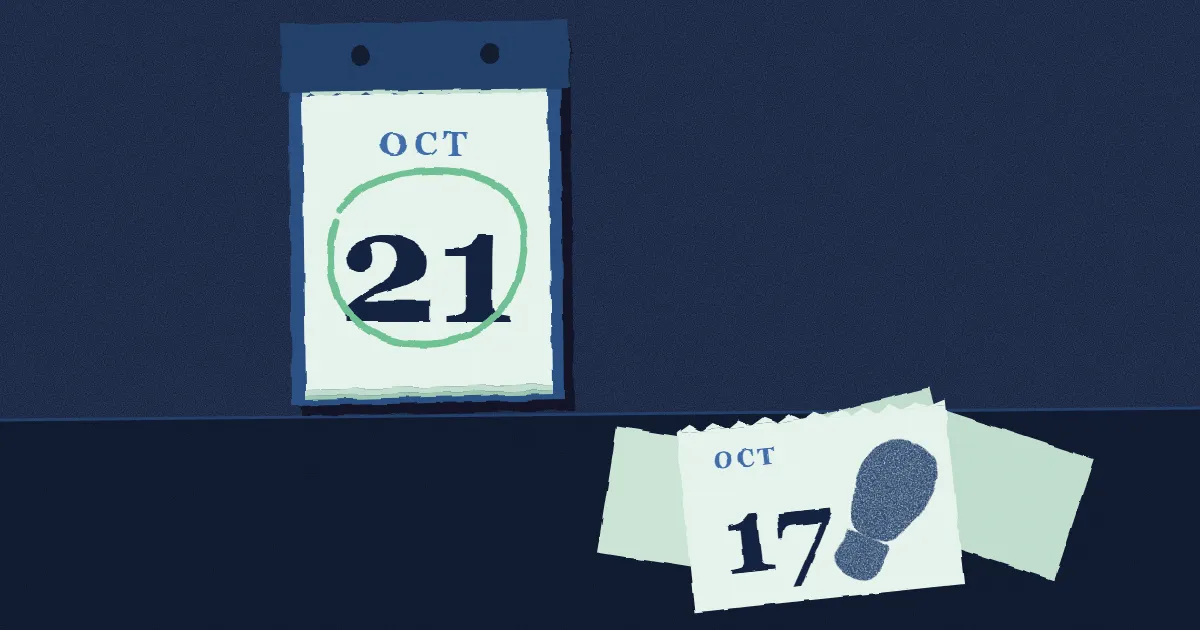
PHP2Shell, the pair of PHP core flaws tracked as CVE-2026-109618 and CVE-2026-109619, was patched on October 21, 2026. Amazon says someone was already trying it four days earlier. In a post on the AWS Security Blog, CJ Moses, CISO of Amazon Integrated Security, writes that its threat intelligence team "identified a PHP2Shell exploitation attempt dating to Oct. 17, 2026, in MadPot telemetry". MadPot is Amazon's network of honeypots, decoy systems built to attract attackers.
That date changes the scope of any investigation. If you look for signs of compromise only from the day the patch shipped, you miss four days in which at least one actor was already probing. Below is what AWS, watchTowr, Datadog and Unit 42 have published, and what to check on your servers from October 17 onward. For the mechanism of both CVEs, see our PHP2Shell analysis; to confirm the fix is really installed on each platform, see our patch verification guide.
What is known so far
The October 17 hit came from an anonymized address, and "the targeting of a honeypot from an anonymized IP address suggests the activity was conducted by a threat actor". On patch day AWS saw more attempts and believes several actors were behind them, because "the actual payloads and choices in anonymization infrastructure varied". It does not claim success: "it's unclear if any of these attempts would have succeeded in real-world systems". Its advice is direct: "investigate from at least starting on October 17th".
watchTowr goes further: "watchTowr has observed exploitation of both CVE-2026-109618 and CVE-2026-109619 in the wild." Datadog Security Labs wrote on October 21 that "we have multiple reports of active exploitation in the wild".
The most detailed case comes from Unit 42, added in its October 23 update. "The attackers targeted a government entity in Europe", and "within two hours of the initial exploitation they had successfully accessed password hashes" along with MFA secrets. They then set up an NTLM relay tunnel toward Active Directory and tried to escalate to Domain Admin. Unit 42 also writes that it "observed attackers using agentic AI attack platforms for post-exploitation activity." It does not name the government or the country. Its Cortex Xpanse telemetry counts "over 22.6 million exposed instances potentially vulnerable".
Visibility depended on who was looking. Huntress wrote: "As of October 21 at 4:30pm ET, Huntress has not observed in-the-wild exploitation on partner systems." And in the CISA Known Exploited Vulnerabilities catalog (KEV), version 2026.10.23, neither CVE appeared when we checked on October 24.
| Date (2026) | Event | Source |
|---|---|---|
| Oct 17 | First attempt detected in MadPot | AWS |
| Oct 20 | Leak reported; php.net pre-announces a critical patch | Huntress, php.net |
| Oct 21 | Patch and CVEs around 14:00 UTC; watchTowr sees exploitation; Datadog gets several reports; Huntress sees none yet | php.net, watchTowr, Datadog, Huntress |
| Oct 23 | Unit 42 publishes the European government case | Unit 42 |
| Oct 24 | Still not in CISA KEV | KEV feed |
What to check from October 17
watchTowr's first advice is to preserve evidence: save PHP and web server logs, configurations and suspicious files before you change anything. Then work through these steps on every web server that runs PHP:
- Memory errors at startup. Datadog points to "PHP Fatal error: Allowed memory size of 16777216 bytes exhausted"; when the error says "Unknown on line 0", PHP failed while initializing the request, before running any script. Running out of memory is not proof of an attack, so cross it with very large POST requests, connections reset toward the upstream and worker crashes.
- Unusual requests. AWS flags POST requests carrying the
PHP_SESSION_UPLOAD_PROGRESSstring in upload forms. watchTowr flags "unusually large or deeply nested multipart requests" and "PHP workers that crashed or hit their memory limit". Datadog adds upload file names that contain PHP tags or serialized object fragments. - Odd session cookies. Per Datadog,
Set-Cookie: PHPSESSID=values that are abnormally long or shaped differently from what your application issues. - Activity after a possible compromise. Per watchTowr: "Check affected systems for new web shells, unexpected cron jobs, or newly created accounts tied to PHP processes." Also files written to the web root and outbound connections from PHP processes that nobody can explain; Datadog adds shells spawned by a web worker. AWS sums it up: "Check for unexpected process execution or file modification on web application servers."
Frequently asked questions
Was PHP2Shell a zero-day?
There was an exploitation attempt before the patch: AWS dates it to October 17. Whether any attempt succeeded before October 21 is not established; AWS itself says it is unclear.
I already patched. Do I still need to investigate?
Yes. Patching closes the door but says nothing about who came in earlier. Review from October 17, keep the logs, and look for web shells, new cron jobs and new accounts.
Is disabling session.upload_progress.enabled enough?
No. Datadog says that change does not fully protect you and that "Only patching fixes these vulnerabilities." watchTowr calls the .ini settings ineffective; php.net presents them as partial mitigations.
Conclusion
The useful date for PHP2Shell is October 17, not October 21. On patch day watchTowr observed exploitation and Datadog received several reports, and Unit 42 documented a real intrusion that reached password hashes within two hours. Absence from KEV says nothing about your servers.
If you run PHP in production, patch first, then pull your logs back to October 17 and work through the list above. For follow-up coverage of PHP2Shell, keep an eye on the Nippysoft blog.
References
- CVE-2026-109618 — NVD Detail: nvd.nist.gov/vuln/detail/CVE-2026-109618
- CVE-2026-109619 — NVD Detail: nvd.nist.gov/vuln/detail/CVE-2026-109619
- AWS Security Blog — PHP2Shell exploitation prior to public disclosure in MadPot: aws.amazon.com/blogs/security/amazon-threat-intelligence-identifies-php2shell-exploitation-prior-to-public-disclosure-in-madpot
- watchTowr — PHP2Shell exploitation and investigation guidance: watchtowr.com/intelligence/php-remote-code-execution-php2shell
- Datadog Security Labs — PHP2Shell, critical vulnerabilities in PHP: securitylabs.datadoghq.com/articles/php2shell-critical-vulnerabilities-in-php
- Unit 42 — CVE-2026-109618 and CVE-2026-109619 threat brief: unit42.paloaltonetworks.com/cve-2026-109618-cve-2026-109619
- php.net — 8.5.12, 8.4.27, 8.3.36 and 8.2.35 security release: php.net/archive/2026.php#2026-10-21-5
- CISA — Known Exploited Vulnerabilities catalog (JSON feed): cisa.gov/sites/default/files/feeds/known_exploited_vulnerabilities.json
Tags
Share this post
Subscribe
Get the latest posts delivered right to your inbox.



Leave a comment